Thursday, 21 May 2015

Field Trip

We're going on a field trip today!
Location: Granville Island

Dial up the creativity and the independence.....and bring the best, most responsible version of yourself. In other words, bring your "A Game." This is for marks. Your "professional behavior" is equally as important as the images your group creates.


Start Time: 12:00pm sharp, in front of the school.

Scavenger Hunt: 
1 photo entry per group per category
....and the group with the most points wins a prize (to be announced).

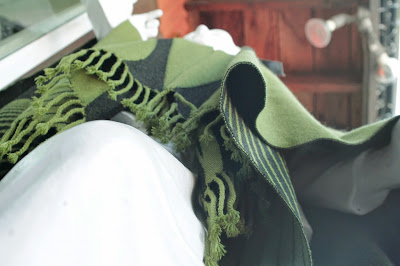
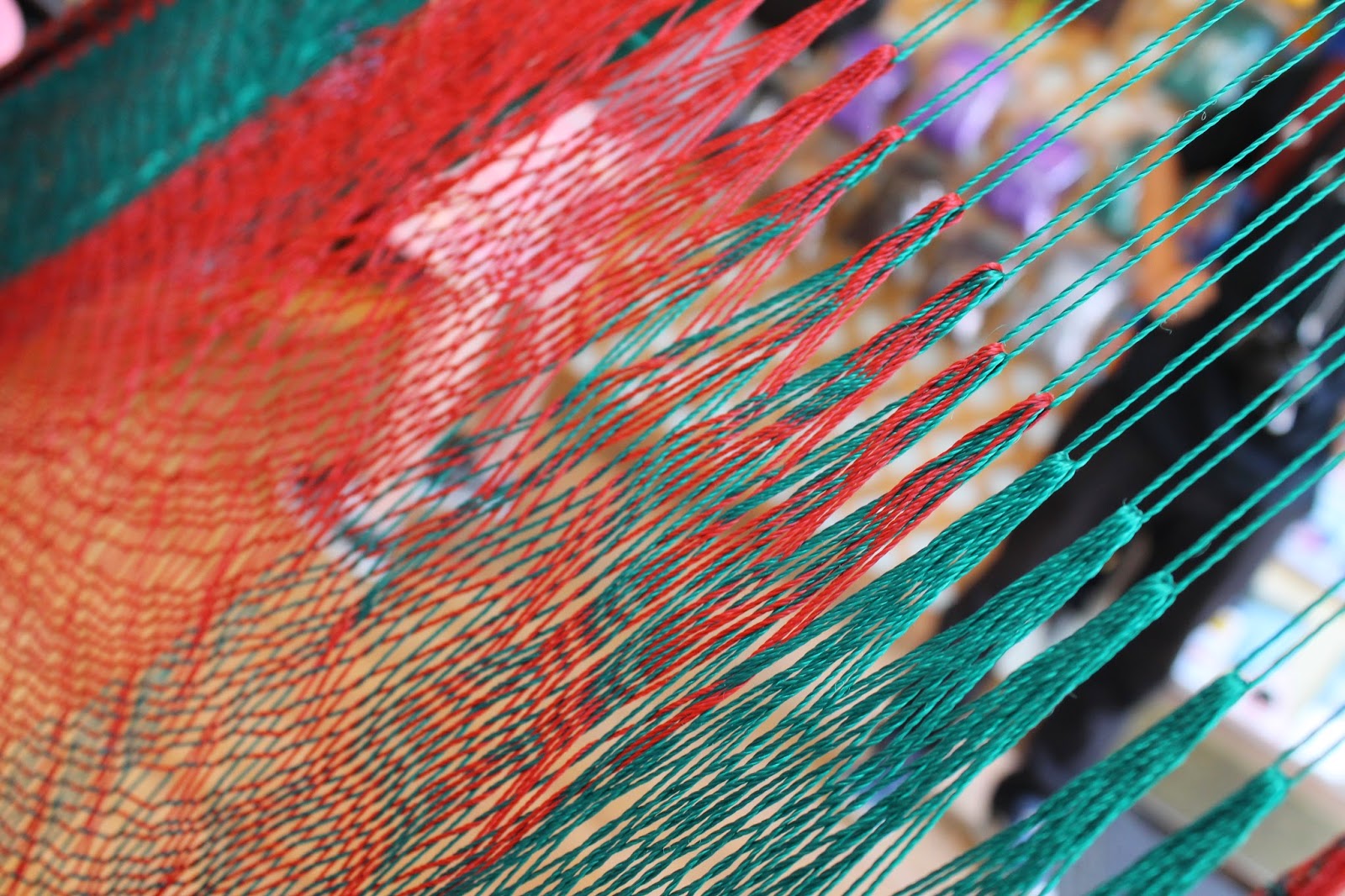
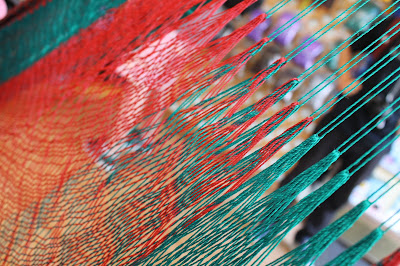
o   Complimentary colors (2 points)
o   A group member posed with legs crossed in a “closed circle” (2 points)
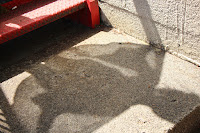
o   Interesting shadows (1 point)
o   Framing (1 point)
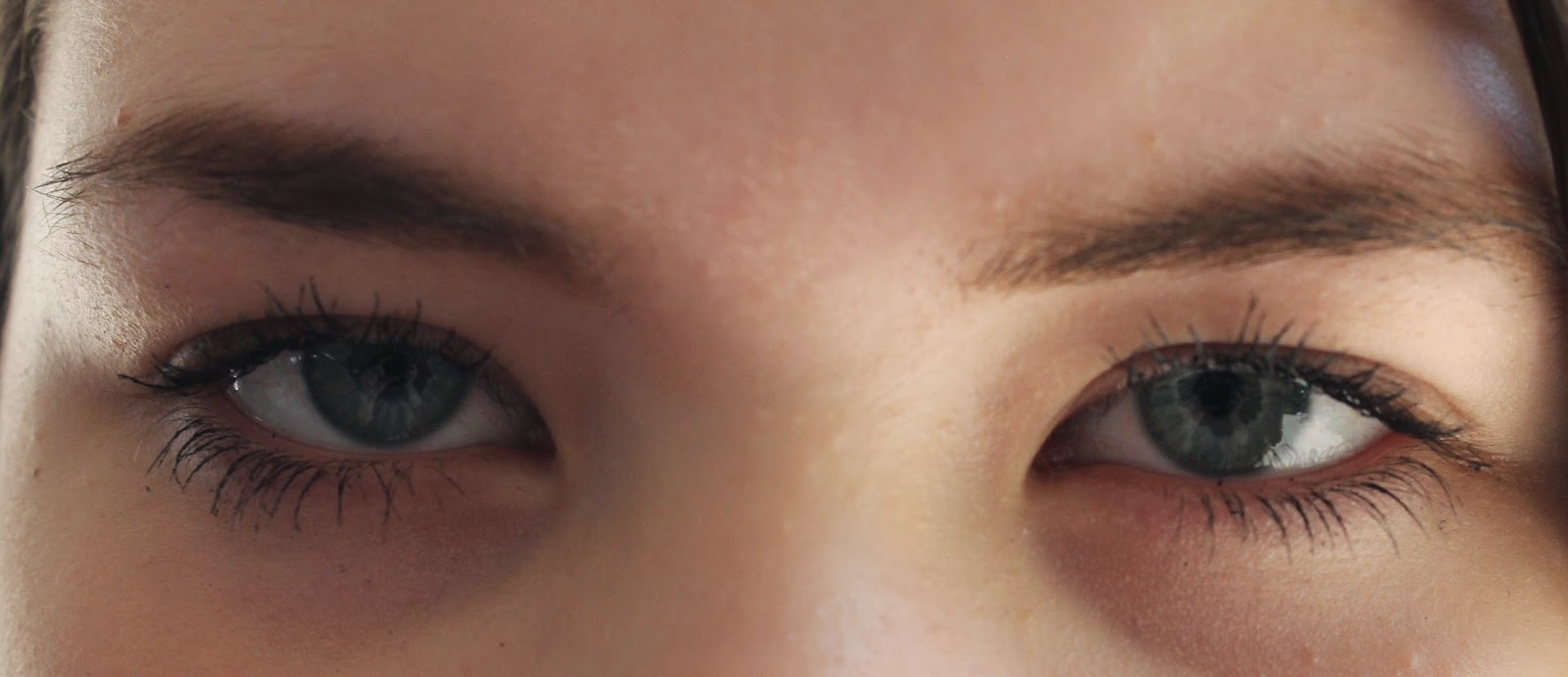
o   Photograph a group member’s eyes close up (1 point)
o   Photograph of a group member’s hands
o   Leading lines (1 point)
o   A reflection (1 point)
o   A shot from a high angle “bird’s eye view” (2 points)
o   Isolate an object with a shallow d.o.f. (2 points)
o   An example of s-curves
o   A still life
o   Rule of thirds (1 point)
o   Pattern (1 point)
o   Freeze movement mid-action (2 points)
o   Showcase pattern & texture with a deep d.o.f. (2 points)
o   A shot from a low angle “bug’s eye view” (2 points)
o   An example of levitation photography (2 points)
o   A group member authentically pulling off the “hand steeple” (2 points)
o   Leading lines actually leading to one of the group members (2 points)
o   Blurred movement from a slow shutter (2 points)
o   Close-up portrait of a group member using a shallow depth of field
 & a long focal length (3 points)
o   A group member authentically pulling off  the 40’s/50’s chic “elbow pop” (2 points)
o   A group member authentically doing the “the Steve Jobs chin-hold” aka “The Thinker” The Thinker ~ Famous Sculpture (2 points)
o   People in Perspective (think: Leaning Tower of Pisa ~3 points)

Group #1 ~ Photo Entries


Group #2 ~ Photo Entries
Complimentary colors

Eyes

Pattern, framing device, and shadow

hands

Portrait

Reflection

Rule of thirds, hand steeple, Steve Jobs chin hold,and leg cross


Group #3 ~ Photo Entries


Group #4 ~ Photo Entries

Group #5 ~ Photo Entries


Group #6 ~ Photo Entries
  Group #7 ~ Photo Entries
 

Tuesday, 19 May 2015

Still Life / Photograms

Photograms, Still Lifes, & The History of Art
"A still life (plural still lifes) is a work of art depicting mostly inanimate subject matter, typically commonplace objects which may be either natural (food, flowers, dead animals, plants, rocks, or shells) or man-made (drinking glasses, books, vases, jewelry, coins, pipes, an so on...) With origins in the Middle Ages and Ancient Graeco-Roman Art, still life painting emerged as a destinct genre and professional specialization in Western Painting by the late 16th century, and has remained significant since then. Still life gives the artist more freedom in the arrangement of elements within a composition than do paintings of other types of subjects such as Landscape or Portrait." ~Wikipedia


1) What makes a good photogram?
  •  Answer this question in your process journal after the class discussion (treat this like you would a Visual Response)
2) How can a photogram also be a still life?
  • "How can a photogram also be a still life?" Create a blog post titled, "Still Life" and answer this question in your own words.
  •  Learn  how to use the flatbed scanner & scan your best "still life" photogram and add to the post.


 Due Date: on or before May 29th.


Monday, 18 May 2015

Complimentary Colors & Color Theory

...to elaborate on Ben's post (In Links & Cool Stuff to Check Out), the color wheel is a corner-stone of the elements & principals of art & design. Visual arts students study this extensively. Below is an example of the basic color wheel:

Do you remember studying it in elementary school? My favorite trick for remembering complimentary colors works like this:

Red / Green  (think "Christmas" colors)
Blue / Orange (think "Halloween" colors)
Yellow / Purple (think "Easter" colors)

~

Below is an example of an advanced color wheel,
which is the version most widely recognized by contemporary artists 
& educators:


Fun color facts:

1) Primary Colors (can't be made by mixing colors)
 Red / Yellow / Blue
2) Secondary Colors (are made by mixing two primary colors)  
Orange / Green / Purple
3) Tertiary Colors  (are made by mixing one primary color with one secondary color)
 Yellow-Orange / Yellow-Green / Blue-Green 
Blue-Purple  Red-Purple / Red-Orange

4) Complimentary Colors (are opposites on the color wheel)

5) Printing color photographs relies heavily on the color wheel 
(You will need to be very familiar with this by the time you get to Gr. 12!)

Assignment:

Print or draw a color wheel in your process journal. 
Label the following in your own writing. You will need it for our class field trip this Thursday! 

a) Primary colors
b) Secondary colors
c) Tertiary colors
d) Complimentary colors

Monday, 11 May 2015

History of Photography Assignment

1) #LetMeSitForADaguerreotype (Jordan & Austin)
2) Tintypes (Serena)
3) Box Camera (Haley)
4) Camera Obscura (Amanda & Tehya) 
5) Dry Plate Negatives (Gabrielle)
6) Polaroid or Instant Film (Michelle & Cindy)
7) Pinhole Cameras (Talia)
8) 35mm Cameras (Kevin)
9) Flexible Roll Film (Victoria)

 Presentation Dates:
  • May 20th: Group 1, 2, 3, 
  • May 27th: Group 4, 5, 6,
  • June  3rd: Group 7, 8, 9,
Please note: If you are in a group, you must make the extra step of evaluating your partner ~ask Ms. Echols for a partner-marking rubric.

Presentation Criteria:
  • A Blog post regarding your topic posted under: "Ms. Echols (Examples & Assignments)" & be sure to include your name(s)!
  • 1-page Summary of your topic & it's place within the history of photography
  • List (& link) at least 2 different sources on your handout. 
Please note: Your summary must fit on 1 page and be able to be glued into everyone's process journals.

Thursday, 7 May 2015

Term 4 "to Do" List

In Your Process Journal:

  • Visual response to  "Documentary on Body Language"
  • Notes on "How to Make a Photogram" & "History of the Photogram: Chapter 1"
  • 3 Examples of Photograms & a brief reflection on why they were selected
  • "Aperture Review" handout 
  • Visual response to  "Annie Leibovitz" video
  • Visual response for "What makes a good photogram?"
  • "What makes a good still life photograph?"(Written definition of a still life)

On Your Blog:

  • "Aperture Review" photos (indicate aperture, shutter speed & ISO)
  • "History of Photography" Presentation & Handout"
  • "Good Photogram" answer to question & scanned image of your BEST photogram
  • "Still Life @ Home" (1 photograph)

Photo Assignment(s):

  • Photogram ~ Still Life (Post your best print on the black, magnetic board in the hallway)
  • Still Life @ Home (digital or film)

Other Things You Can Do.....

  • Mess around in Photoshop
  • Practice your flash cards (bundles of flash cards are on Ms. Echols' desk)
  • Look up "Links, Articles, & Cool Things To Check Out," and comment/review one of the posts. There are 19 to choose from & counting... (bonus marks)
  • Add a new post to "Links, Articles, & Cool Things To Check Out." (bonus marks)


Please note: It is never acceptable to say "I have nothing to do." 
There is ALWAYS something to do in photos class...if you think you've run out of things, feel free to ask Ms. Echols for more ideas. 


Monday, 4 May 2015

Intro to the Darkroom

Photograms ~ Captured Shadows


Tuesday

Person A: Click on the link below, watch "How to Make a Photogram," and take detailed notes in your process journal. 


Person B: Click on the link below, and take detailed notes on "The History of Photograms: Chapter One."


#2 A & B: Pair & Share information. Exchange notes. Class Discussion. 

~

Kodak Teaching Instructions

Darkroom Basics ~ Photograms

The Metropolitan Museum of Art